Layer Disorder: The Overlooked Management Crisis That Is Quietly Derailing Your CAD Project Timelines
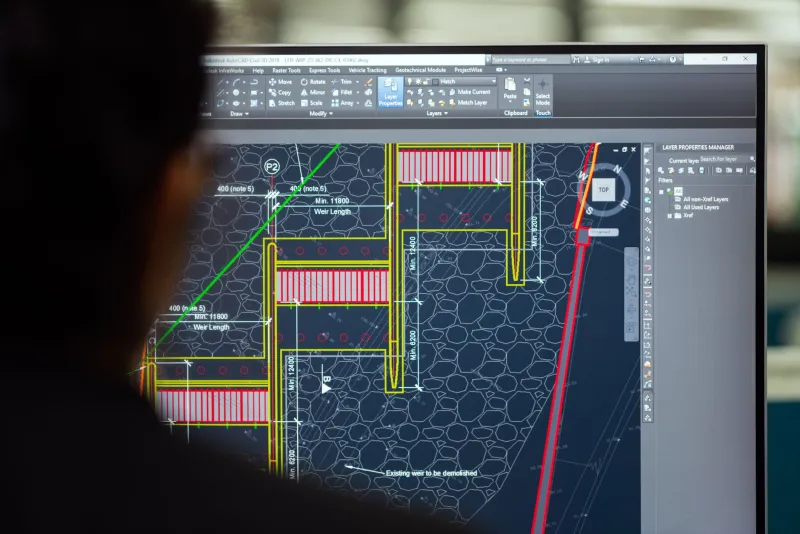
When project managers at architecture and engineering firms search for the root cause of missed deadlines, the investigation typically circles around familiar suspects: insufficient staffing, scope creep, client indecision, or aging workstation infrastructure. Layer management rarely enters the conversation. That omission is costly.
Disorganized, inconsistent, or entirely undocumented layer conventions create a category of delay that is both pervasive and difficult to attribute directly. Because the consequences manifest gradually—an extra hour spent isolating geometry here, a plotting failure the afternoon before a submission there—the cumulative damage tends to be absorbed rather than investigated. For firms managing multiple concurrent projects across disciplines, that absorbed damage can represent weeks of productive time lost annually.
Why Layer Problems Feel Minor Until They Are Not
The deceptive quality of layer-related friction is that each individual incident appears manageable. A drafter spends forty minutes untangling borrowed geometry that arrived embedded in an unrecognized layer structure. A project architect freezes a plot run to manually reassign line weights because the incoming consultant file used a naming schema incompatible with the firm's own. A coordination reviewer struggles to isolate structural elements during a clash review because mechanical and structural layers share an ambiguous prefix.
None of these events, viewed in isolation, registers as a crisis. Collectively, however, they represent a systemic failure in how a firm governs its drawing environment. Research conducted across mid-size US architecture practices consistently indicates that drafters operating without standardized layer conventions spend between fifteen and twenty-five percent more time on file preparation tasks than their counterparts working within clearly defined systems. On a project with a six-month timeline, that differential is not trivial.
The situation becomes more acute when external consultants enter the picture. Structural, mechanical, electrical, and civil consultants each arrive with their own layer conventions, often derived from different interpretations of industry standards such as the American Institute of Architects' CAD Layer Guidelines or the National CAD Standard. Without a firm-level protocol for reconciling those differences, every coordination cycle introduces a new round of manual cleanup.
Auditing Your Current Layer System: A Practical Starting Point
Before a firm can implement meaningful reform, it must first understand the scope of the existing problem. A structured layer audit need not be an elaborate undertaking, but it does require deliberate attention across three dimensions.
Inventory and naming consistency. Pull representative drawings from at least five recent projects spanning different project types—commercial, residential, institutional, or infrastructure, depending on your firm's portfolio. Export the layer lists and compare them side by side. Document the degree of variation in naming conventions, prefix structures, and color assignments. Pay particular attention to whether discipline identifiers are applied consistently and whether layer names would be interpretable by someone unfamiliar with the specific project.
Plotting and display reliability. Identify how often plot style table assignments required manual intervention during the most recent submission cycle for each sampled project. Interview the staff members responsible for final plot runs. Recurring manual corrections are a reliable indicator of layer convention failures upstream.
Cross-discipline compatibility. Review the most recent set of consultant-issued drawings for each sampled project. Catalog the layer naming structures those consultants employed and compare them against your firm's internal conventions. Note where conflicts required resolution and estimate the time invested in resolving them.
This audit will rarely produce comfortable findings. Most firms discover that their layer conventions have evolved organically over years, shaped by individual drafter preferences, project-specific workarounds, and the accumulated influence of consultants whose files were imported and partially adopted without formal review. The audit's value lies precisely in making that evolution visible.
Building a Layer Standard That Actually Scales
A layer standard that exists only as a PDF in a shared drive folder is not a layer standard—it is a document. The distinction matters. Effective layer governance requires that the standard be embedded directly into the firm's working environment, not merely referenced from it.
The following framework reflects the practices of firms that have successfully implemented durable layer systems across varied project types.
Adopt a structured naming convention and enforce it through templates. Whether your firm aligns with the AIA Layer Guidelines, a proprietary convention, or a hybrid approach, the convention must be encoded into your master drawing templates. Every new project file should open with the correct layer structure already in place. Relying on drafters to manually recreate layer names from a reference document introduces immediate inconsistency.
Define discipline prefixes with precision. Ambiguity in discipline identifiers is among the most common sources of coordination confusion. Establish unambiguous, documented prefixes for every discipline your firm regularly coordinates with—architectural, structural, mechanical, electrical, plumbing, civil, landscape—and communicate those prefixes to consultants at project kickoff. Include layer convention requirements in your consultant coordination agreements.
Assign plot style table relationships at the template level. Line weight and color assignments should be determined by the layer standard, not adjusted project by project. When plot style tables are configured correctly within the master template and maintained consistently, final plot runs become reliable rather than requiring manual intervention.
Implement a layer audit step in your QC workflow. Before any drawing set advances to a coordination review or client submission, a designated team member should run a layer audit using AutoCAD's built-in layer management tools or a purpose-built audit routine. This step catches naming deviations, rogue layers introduced by consultant imports, and unresolved display conflicts before they affect downstream recipients.
Version and document the standard explicitly. Layer conventions should carry a version number and a revision date. When the standard is updated—to accommodate a new project type, incorporate consultant feedback, or align with a revised industry guideline—the change should be documented and communicated to all staff. Undocumented evolution is how layer conventions degrade back into chaos.
The Organizational Dimension
Technical solutions alone are insufficient. Layer standards fail not because they are poorly designed but because they are inconsistently observed. Sustaining a layer convention requires organizational commitment that extends beyond the CAD manager's office.
Firms that maintain effective layer standards typically share several organizational characteristics. Leadership treats the layer standard as a professional infrastructure investment rather than an administrative burden. New hires receive explicit layer convention training as part of onboarding, not as an afterthought. CAD managers are empowered to enforce compliance and are given the time to conduct periodic audits rather than being consumed entirely by project-level production support.
Equally important is the culture surrounding deviation. When a drafter introduces an off-convention layer to solve an immediate problem, that deviation should trigger a structured conversation about whether the convention needs updating—not silent acceptance that quietly expands into a new informal practice.
Reframing the Conversation Around Deadlines
The firms that consistently deliver on deadline are rarely those with the newest hardware or the largest staffing budgets. They are the firms that have invested in the foundational governance systems that allow their technical infrastructure to function as designed. Layer management is one of the most consequential of those systems.
When a coordination review runs smoothly because every discipline's geometry is immediately identifiable and correctly isolated, that is not luck. It is the result of deliberate, sustained attention to a discipline that most firms underestimate until a deadline has already slipped. Treating layer strategy as a professional imperative rather than an administrative detail is, for many firms, one of the highest-return investments available.