Uneven CAD Proficiency Is Costing Your Firm More Than You Think
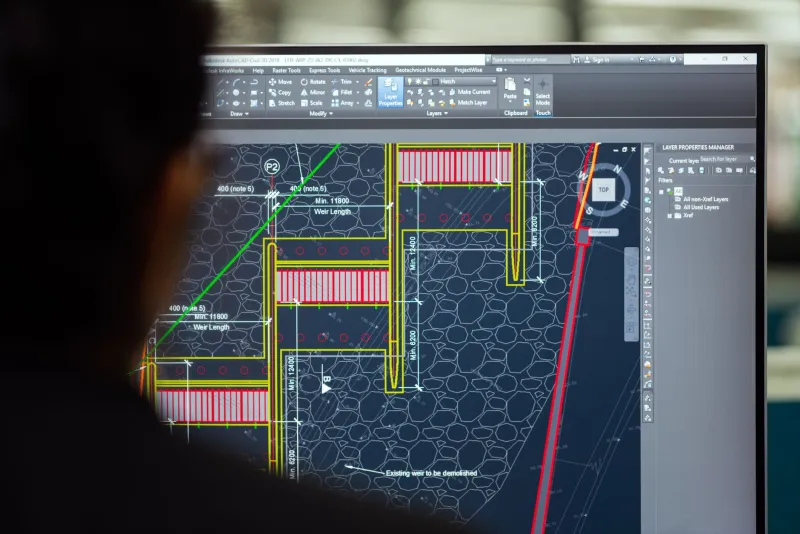
In most architecture and engineering firms, AutoCAD proficiency is treated as a given. Candidates list it on their resumes. Managers assume it during onboarding. And yet, when project timelines slip and revision cycles multiply, the root cause is often not a design problem at all—it is a skills problem that nobody thought to measure.
The gap between what professionals claim to know and what they can reliably execute under deadline pressure is wider than most firm leaders realize. And because that gap is rarely quantified, its financial consequences remain invisible until they have already done significant damage.
The Hidden Cost of Inconsistent Competency
Consider a scenario that plays out regularly in mid-size architecture firms across the country: a project team is assembled with a mix of senior drafters and recent graduates. The senior staff work efficiently in AutoCAD, leveraging blocks, dynamic components, and custom tool palettes built over years of practice. The junior staff, by contrast, rely on manual workarounds—drawing elements from scratch, applying layer assignments inconsistently, and spending three times as long to produce outputs that still require correction.
The result is not simply slower work. It is a workflow mismatch that forces senior staff to act as informal quality-control reviewers rather than productive contributors. Billable hours that should go toward design development instead go toward fixing avoidable errors. In a firm billing at $150 per hour, even four hours of senior-level rework per week translates to more than $30,000 in absorbed costs annually—and that estimate is conservative.
Rework cycles are only part of the equation. Missed submission deadlines carry their own penalties: strained client relationships, potential liquidated damages clauses in contracts, and reputational harm that affects future business development. When the underlying cause is preventable inefficiency, those costs become especially difficult to justify.
Where Skill Gaps Most Commonly Emerge
Not all proficiency gaps are created equal. Research into CAD team performance consistently identifies three areas where inconsistency causes the most disruption.
Layer and standards compliance is the most pervasive issue. Firms that have invested in developing internal CAD standards often find that those standards are applied inconsistently by staff who were never formally trained on them. The consequence is drawing sets that require extensive cleanup before they can be coordinated with consultants or submitted for permit review.
Block and reference management represents a second high-impact area. Professionals who do not fully understand external references, block attributes, or dynamic block parameters frequently resort to static geometry that is difficult to update. When a design change requires modifying an element that appears dozens of times across a drawing set, the difference between a team that uses blocks correctly and one that does not can mean the difference between a two-hour revision and a two-day one.
Output and plotting workflows round out the top three. Inconsistent use of plot styles, paper space layouts, and viewport configurations produces drawing sets that look unprofessional and require manual intervention before they are ready for distribution. For firms producing large volumes of construction documents, this inefficiency accumulates rapidly.
Diagnosing Your Team's Capability Levels
Identifying where proficiency gaps exist requires a structured assessment rather than anecdotal observation. The following diagnostic framework is designed to give firm leaders an objective picture of their team's capability distribution.
Step 1: Define your proficiency benchmarks. Before you can assess your team, you need to establish what competency actually looks like at each level. Define baseline, intermediate, and advanced proficiency in concrete terms—not vague descriptors. Baseline might mean accurate layer assignment and consistent use of firm-standard templates. Intermediate might include confident use of external references and annotative scaling. Advanced might encompass custom LISP routines, dynamic block creation, and batch processing with script files.
Step 2: Conduct task-based assessments. Self-reported skill levels are notoriously unreliable. A more accurate picture emerges from brief, practical assessments in which staff complete specific AutoCAD tasks under timed conditions. These need not be lengthy—a 30-minute exercise covering layer management, block insertion, and a basic layout configuration will reveal capability gaps more clearly than any questionnaire.
Step 3: Map assessment results to project roles. Once you have a clear picture of individual proficiency levels, compare that distribution against the roles those individuals are expected to fill. If your team structure requires three intermediate-level AutoCAD operators and your assessment reveals you have one, you have a quantifiable resource gap that can be addressed proactively.
Step 4: Prioritize development by impact. Not every gap warrants the same training investment. Focus first on deficiencies that directly affect deliverable quality and project timelines. Closing the gap in external reference management, for example, will typically yield faster returns than training staff on advanced 3D modeling if your firm's primary output is 2D construction documentation.
The ROI of Structured Training Programs
Firms that have implemented formal AutoCAD training programs consistently report measurable improvements in both productivity and drawing quality. A structured program—one that moves beyond one-time workshops to include progressive skill development, practical application, and periodic reassessment—creates compounding returns over time.
The economics are straightforward. A comprehensive training engagement for a team of ten staff might cost between $5,000 and $15,000 depending on program depth and delivery format. If that investment reduces rework by even two hours per staff member per week, the payback period at average billing rates is measured in weeks, not years.
Beyond direct cost recovery, training programs carry strategic value that is harder to quantify but equally real. Teams with consistent, high-level AutoCAD proficiency produce more reliable documentation, coordinate more effectively with consultants, and adapt more quickly when project requirements shift. That reliability translates into stronger client relationships and a competitive advantage in proposal evaluations where delivery track record matters.
Firms that treat training as a fixed operational expense rather than a discretionary investment also report lower turnover among technical staff. Professionals who feel their employers are committed to their development tend to remain engaged longer—reducing the recruitment and onboarding costs that accompany high attrition.
Building a Culture of Continuous Development
The most effective firms do not treat CAD proficiency as a one-time credential. They build it into the fabric of how their teams operate. This means establishing regular opportunities for skill development—whether through internal lunch-and-learn sessions, access to online training platforms, or structured mentorship between senior and junior staff.
It also means holding proficiency standards accountable. When drawing quality is tracked, when rework is attributed and analyzed, and when skill development is tied to performance reviews, the message is clear: technical excellence is not optional. It is a professional standard the firm takes seriously.
For firm leaders, the first step is simply deciding to measure what has previously gone unmeasured. The productivity losses driven by uneven CAD competency are real, but they are also correctable. The firms that recognize this early, and act on it deliberately, will find themselves ahead of competitors who are still absorbing costs they have not yet thought to count.